

Shell Eco-marathon Stunner: Hungarian Students Smash World Record

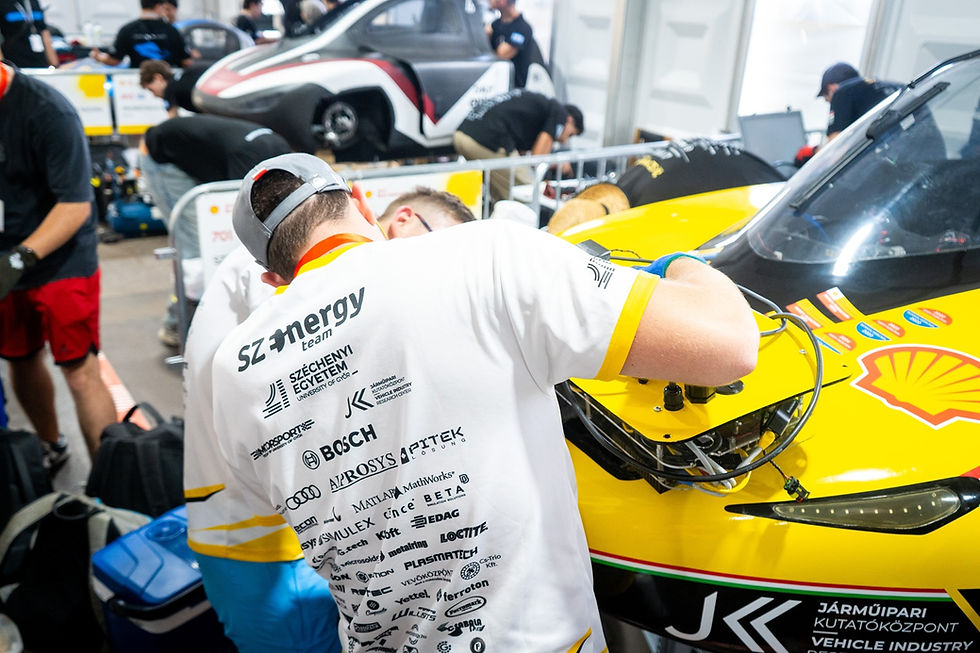
Hungarian engineering students have once again made their mark at the Shell Eco-marathon, with Széchenyi István University’s SZEnergy Team taking first place in the Urban Concept battery-electric category for the fifth consecutive year.
The prestigious international student engineering competition, held this year at the Silesia Ring in Poland, was staged under unusually demanding conditions as extreme heat forced organisers to shorten race times and reduce the number of laps. Yet the team from Győr not only defended its title but also bettered its own previous world record, achieving an energy efficiency result of 332 kilometres per kilowatt-hour.
The victory cements SZEnergy Team’s status as one of the most successful teams in the history of the competition.
“It is a tremendous joy for us to have defended our title again this year,” the team said. “Every year brings new challenges, for which we prepare through months of development and teamwork. This is precisely why this success is so valuable to us, and we are especially proud to have set another world record.”

The Shell Eco-marathon, now running for more than four decades, challenges students to design, build and drive vehicles capable of travelling the greatest possible distance using the least amount of energy or fuel. Unlike conventional motorsport, the competition is not about raw speed, but precision engineering, efficiency and innovation.
Nearly 5,000 students from around 50 countries take part each year, competing in Prototype and Urban Concept categories with vehicles powered by internal combustion engines, batteries or hydrogen fuel cells. Shell says the programme is designed to give the next generation of engineers practical experience while encouraging sustainable transport solutions.
Hungary was also represented by two teams from the Budapest University of Technology and Economics. BME SharkTeam finished twelfth in the Prototype category with an internal combustion engine vehicle, while BME HydroShark, competing with a hydrogen-powered Urban Concept car, was unable to complete the course successfully this time.
Despite that setback, the Hungarian presence at the event underlined the strength of the country’s engineering education and student-led innovation. The results suggest that Hungarian universities are continuing to produce young engineers capable of competing at the highest international level.
This year’s heat added an extra layer of difficulty. With tighter race windows and fewer laps available, teams had less margin for error and were forced to extract maximum performance from both their vehicles and strategies.
For SZEnergy Team, the pressure only sharpened the result: another gold medal, another world record, and another reminder that, at the Shell Eco-marathon, Hungarian engineers remain a force to be reckoned with.


Comments